
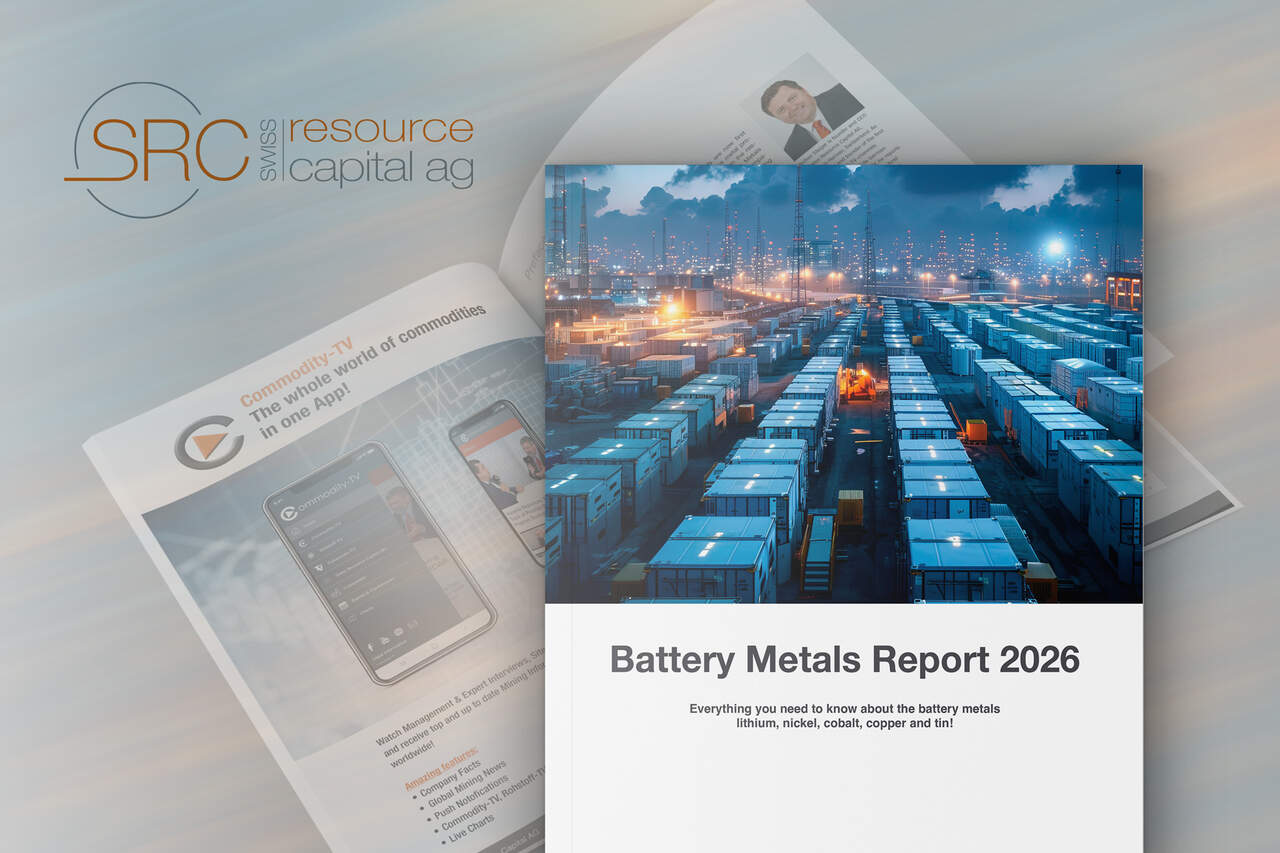
The global energy transition is advancing at a rapid pace—and with it, the industrial-scale mass production of lithium-ion batteries. While this technology was originally used primarily in portable electronic devices, it has now become the central energy storage solution for electrification. In particular, the rapidly growing market for electric vehicles and the increasing expansion of stationary battery storage are driving demand for lithium-ion batteries to levels that were barely imaginable just a few years ago.
The rapidly rising demand for lithium-ion batteries inevitably leads to a massive need for strategic battery metals. The most important raw materials include lithium, cobalt, nickel, copper, and tin. These metals are indispensable components of modern batteries and electric drive systems. Lithium is the central element of electrochemical storage technology.
As the global economy becomes increasingly electrified, pressure on global commodity markets is also growing. Numerous industry analyses are already warning of potential shortages of several battery metals. Lithium, in particular, has become one of the most sought-after raw materials of the energy transition in recent years. Demand for lithium could increase many-fold by 2030, as virtually every lithium-ion battery requires this raw material. Similar trends are emerging for nickel and cobalt.
For investors, this presents an excellent opportunity to enter the world of battery metals right now, as we will explain in this report.
